Showing posts with label interview. Show all posts

Wednesday, July 28, 2010

INTERVIEW : Timber Timbre talks festivals and his mysterious side

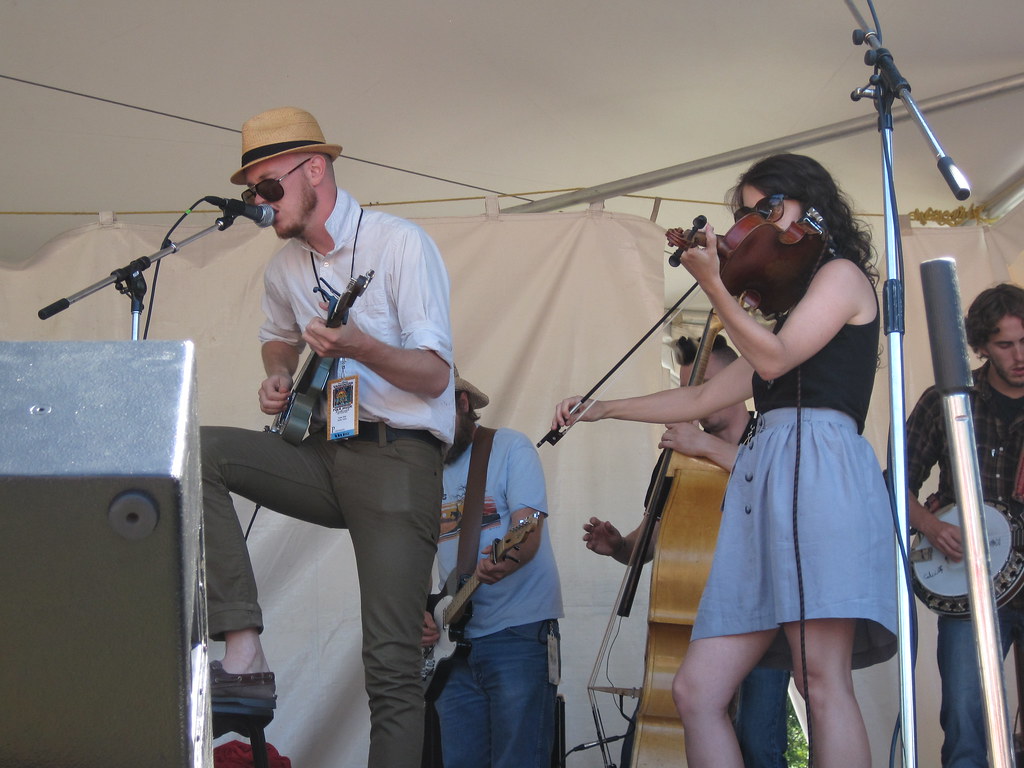
Montreal-based Timber Timbre is the brainchild of Taylor Kirk, and he recently joined us at the Vancouver Folk Music Festival to discuss his experiences in festivals across Canada, as well as his perchance for dark, moody shows.

Accompanying Kirk on tour are musicians Simon Trottier (Ferris Wheel) on lapsteel and autoharp, and Mika Posen (Forest City Lovers) on violin. He described how playing folk festivals, of which Vancouver’s was his first, is “a whole other world.” Timber Timbre, other than his own showcase, collaborated with other artists such as The Deep Dark Woods and Nathan in workshops, as well as played a short “tweener” set prior to Arizona’s Calexico’s main stage headlining set. Contrast this with his experience at the Ottawa Blues Fest the week prior, which included acts such as Rush and Supertramp, where they “played after a pretty dirty blues rock band.” As Kirk laughingly recalls, “it was pretty nuts.”

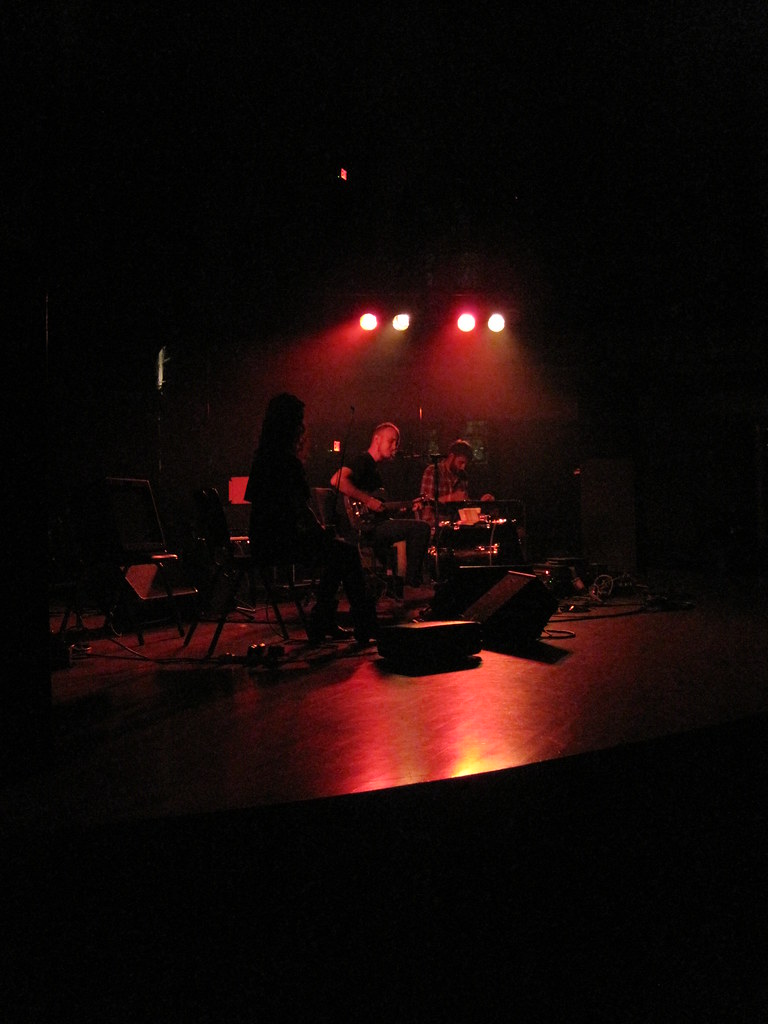
Don’t be fooled in thinking that the mellow atmosphere at sunny Jericho Beach meant Kirk had a chance to let down his guard. At Victoria’s Rifflandia Festival, where I caught him last September, Timber Timbre’s set was in an unlit church with 5 sole red spotlights fixed on the performers (see right). You couldn’t even see their faces, and only discerning fans could be sure how many people were actually on stage. When probed about his desire for a mysterious aura, Kirk commented, “we’re not used to playing in the daylight, in open air.” For him, being in an indoor venue allows greater artistic control over his setting. “Starting from nothing and having total control – starting from zero light and zero decibels, with a totally quiet audience,” and building up not only the sound but also the mood and ambiance is an important part of the Timber Timbre live show.

Timber Timbre enjoyed wildly positive critical reception of his Arts & Crafts released self-titled album, which resulted in a 2009 Polaris longlist nomination. Kirk revealed that he’s looking forward to the end of summer jaunt through Canada in order to head back into the studios to record material for a new album. So make sure to keep your eyes and ears peeled for more of his brand of atmospheric night-time freak folk.

(interviewed by Alex Cameron and Brenda Lee, photos by Brenda Lee)

Tuesday, May 25, 2010

INTERVIEW : Paul Murphy of Wintersleep talks New Inheritors and relentless touring


Having won a Juno for New Group of the Year and being hand picked by Paul McCartney as an opening act are just a few of the distinctions that Halifax, Nova Scotia's hottest exports Wintersleep have under their belt. Although they may be best known for that dang catchy song "Weighty Ghost," Wintersleep has churned out three previous albums' worth of their eerie and unsettling brand of indie rock. Their fourth album New Inheritors is now available every way you like your music in Canada, the U.S. and Europe.

Similarly, you can follow them in every way you like your online music stalking. Here they are on Facebook, TwitterLast.FM and Myspace. Loel Campbell, the drummer, also maintains a relatively prolific blog on the site.

I caught lead singer and guitarist Paul Murphy (also of Postdata) in the middle of their European tour where he answered some questions regarding touring and the newly released album New Inheritors.

Brenda: The new album is named “New Inheritors.” What’s the significance of the idea of inheritance to the album?
Paul: The title quotes Nathanial Hawthorne's "The New Adam & Eve," the full quote that was used in the song being 'new inheritors of earth." I initially just liked the juxtaposition of a word like new and the idea of inheritance, and the formal tag of a word like inheritance applied to something natural, the earth. We inherit things in whatever condition they come in and have a job to preserve these things, to live with them or despite them, and also have the power to fuck up.. The idea that there are things that exist before us and will outlive us and have a pretty immense impact.. The idea of inheritance and entitlement, property and ownership, but also the responsibility that these things come with or should come with but sometimes don't. To be clear, it isn't a concept record on the idea of inheritance, there are other ideas floating around there too!

B: There are a couple of songs on the upcoming album that evoke the imagery of death (black, mausoleum, blood, decay, etc). Was it a conscious decision to make a dark album thematically?
P: I don't think I've ever really consciously set out to make the lyrics dark or light.. There is a space that you pull the melody from, that you hear and that you work with. It is something that just hits you or occurs... Definitely don't sit in my room trying to think of the darkest possible thing I can say before writing a song!

B: How do you think the band and your sound have evolved since Welcome to the Night Sky [the previous album]?
P: Well, we have a new bass player in the lovely and talented Michael Bigelow and Mr. Jon Samuel on the keys; both played a big role on this record. That coupled with the immense amount of touring we've been up to since the WTTNS release, playing in different countries, writing during sound checks, having to really block off time and get shit done when we could certainly contributed... [It's] something we've never really had to do before and which was really difficult but somehow liberating, and in the end, seemed to be really crucial to the feel of this record.

B: Describe briefly the experience of crossing into another artistic realm in collaborating with Graeme Patterson to create the album artwork.
P: We have always been really adamant about the artwork for our records being unique and created by artists that we love and are friends with. We also like the idea of art work being inspired as directly by the music and lyrics as possible-- we send around lyrics and loose themes and early cuts from the record, that sort of stuff, hoping that something unique and special comes out. Graeme has been someone we've admired for such a long time, just someone with such a unique, great style. He seemed to have a good sense of what we wanted but also completely surprised us and amazed us in the end too, if that makes any sense at all.

B: Wintersleep has recently passed through Vancouver and played several shows at the Olympics. What was that experience like? Did you guys get a chance to enjoy the sights and sounds?
P: It was pretty great. Real nice energy in the city... and free shows, can't beat it..! I really like the feel of those sorts of shows. We were so busy every day just setting up and playing that we did not get a chance to see anything. Actually, we were 30,000 feet in the air when Crosby got the game winning goal for the men's hockey portion. That was a nice moment actually; on the plane, the captain announced it over the speakers as soon as he got word.

B: Wintersleep has garnered a reputation for being a really hard working band. Have you had a chance to rest in between promoting the last album and this one?
P: No.

B: Looking at your tour dates, the band is touring quite extensively through Europe and the US. When can we expect a Canadian tour for New Inheritors?
P: In the Fall... Gonna be pretty extensive! :)


They're going on a thorough U.S. tour but sprinkled in between are some Canadian festival dates. Here they are below:

26 May 2010 21:00
Mod Club Toronto, Ontario, CA
4 Jun 2010 20:00
First Unitarian Church of Philadelphia Philadelphia, Pennsylvan, US
5 Jun 2010 20:00
Great Scott Allston, Massachuse, US
6 Jun 2010 20:30
Iron Horse Music Hall Northampton, Massachuse, US
8 Jun 2010 20:00
Lincoln Hall Chicago, Illinois, US
9 Jun 2010 20:00
7th Street Entry Minneapolis, Minnesota, US
12 Jun 2010 21:00
High Dive Seattle Seattle, Washington, US
13 Jun 2010 21:00
Doug Fir Lounge Portland, Oregon, US
15 Jun 2010 20:00
The Independent San Francisco, California, US
16 Jun 2010 21:00
Detroit Bar Costa Mesa, California, US
17 Jun 2010 20:00
Troubadour Los Angeles, California, US
18 Jun 2010 20:00
Sail Inn Tempe, Arizona , US
19 Jun 2010 20:00
Corazon Santa Fe, New Mexico, US
21 Jun 2010 20:00
Mohawk Austin, Texas , US
23 Jun 2010 20:00
Bottle Tree Birmingham, Alabama , US
24 Jun 2010 20:30
Earl East Atlanta, Georgia , US
27 Jun 2010 20:30
Bowery Ballroom New York, New York, US
28 Aug 2010 18:30
Molson Canadian Amphitheatre Toronto, Ontario , CA
4 Sep 2010 16:00
Northlands Grounds - SONiC BOOM Festival Edmonton, Alberta , CA

Thursday, May 20, 2010

INTERVIEW : Royal Wood speaks on life, love and lust as muse


Reaching him in Winnipeg early yesterday afternoon, Royal Wood was bright and enthusiastic when we spoke over the phone. And why shouldn’t he be? Wood is halfway through a tour supporting label mate David Gray, playing to full theatres every night. On top of that, he has a new album to showcase to these crowds. The Waiting, Wood’s third full-length recording, is already out on iTunes and physical copies are set to be released via Maple Music Recordings on May 25. The future, as they say, is bright.

The Waiting differs from Royal Wood’s previous efforts in that it was not self-produced. Wood had previously arranged and played almost all of the instruments in all his records. However, this time around, he felt the “uncomfortable” challenge to take the album “to another level that you can only achieve with someone else.” This someone else turned out to be producer Pierre Marchand (who had previously worked with the likes of Sarah MaLachlan) who produced 3 tracks off The Waiting. The remaining tracks were co-produced by Wood and Dean Drouillard, who also supports Wood on guitar. The Waiting was recorded in Marchand’s studio in Montreal over a span of two days.

Below, Royal joins me in a conversation regarding the experience of letting go of control in the production process, the muse (almost with a capital M) of his music, and becoming a confident songwriter.


Brenda: What do you think the goal of this record was?
Royal: Sonically, I wanted to enter into a new territory. I wanted it to not just be about me anymore. And when you’re self-producing, it’s hard to expand into that since you’re calling all the shots, and you’re pigeonholed by your own choices and limits. That’s why it’s so valuable to have a producer and artist coming together to make something that you alone couldn’t make. That really was the vision I wanted to enter upon, this artistic realm where I had the producer and my band with me. My band that I had with me throughout the years, having them there to have a say. So it wasn’t just me writing the parts and dictating it for them, but having them come up with the parts together in the studio. It was a big group effort.

B: Having produced all your previous albums, what was it like to let someone else grab hold of the reins?
R: It was terrifying. That drive up to Montreal to Pierre’s studio was definitely nerve-wracking. There were a couple of sleepless nights. I knew what I wanted, but it’s strange to play your songs for others and for them to add their own ideas.

B: It’s like having your songs before a panel discussion before you record it.
R: Yeah, exactly. But Pierre acted as a captain. Everyone had their own vision of what they wanted the album to sound like, and Pierre filtered a lot of the ideas so we don’t have the cello or whatever going off in a complete different direction.

B: Do you feel like there was a cohesiveness to The Waiting?
R: Most definitely. I knew what my budget was going in; I knew how many songs I could make. Some artists could record 18 tracks and pick out 11 of the best songs, but I didn’t have that luxury at this point. I was recording with Pierre in his incredible studio, in a different city; expenses were very high. So I had to plan out the songs, which ones would be ballads, which ones would be rockier, or mid tempo, and also met the story I wanted to tell.

In terms of inspiration, Royal Wood returns to the muse of life and love again and again. Known for writing love songs, Wood emphasizes that he can’t write jingles or “hokey pop songs that make someone cry.” Songs seem to flow from the pen for him. That’s not to say that The Waiting is an album which only addresses love; for example, “Birds on Sunday” is a song about faith, whether religious or atheistic, about having it, losing it and trying to regain it. All in all, Wood emphatically states that life is the only muse. “That’s what inspires every artist, and what inspires every human being; it’s our existence.”

B: Tell me a little bit of the title, "The Waiting." What does that signify to you and how does that weave into the songs?
R: "The Waiting" is in all intents and purposes an awakening. Hitting my 30s, and realizing that I had spent a good deal of my 20s becoming the man I am, and learning how to have relationships in life, whether that’s with family or your lover, or whomever. Sometimes I found myself waiting for mirror experiences to happen. If you’re in a great relationship, waiting for it to split, and when it has, waiting for it to come back.
With everything, so many of us are not existing in the moment, and The Waiting is about that. In this industry we also live by a calendar, you live on a tour and you have all your days planned out. You’re always thinking of the next 12 shows but what you should be thinking about is the one show you’re doing. So the songs are about that, the duality that we live with, and what I had learned through the process of writing the songs over the course of the two years - how to live in the moment.

B: In your bio, you mention that this is your first album with “real love songs.” Why do you think you can write those real love songs now, as opposed to before?
R: They were love songs, but they were different. They were honest, obviously. When I was a teenager and trying to write, those songs were fake and forced and I never let them see the light of day. That’s why I didn’t produce my first record until I was 24. I just didn’t know how to write something from a place of truth. It was always just about trying to write a song. What differed this time was that search for true relationships, unlike the majority of relationships in my 20s. That’s what I ended up writing about back then, songs based in love but mostly about figuring out what love is – love of your family, love of yourself, love of your partner. It was about learning how to navigate life as your own person but also how to share your life with someone else. Once you actually learn to share your life with someone and let someone in, then I think you truly learn what love is, and that’s what led to some of the songs on The Waiting, this opening up.

B: At your last Vancouver show, you had mentioned that you recently got married. Do you think that the album was a manifestation of that in your life, to be able to write about this love?
R: Oh absolutely. That’s the muse that led to songs that were strictly about having love – not losing it, not wanting to lose it, not trying to lose it, but about just having it.

B: Yet your first single, “On Top of Your Love,” is a song strictly about lust.
R: That song was purely about lust, yes. Lust of someone that you can’t have. In my industry, we have to work a lot of time away from our loved ones. I certainly have to spend a lot of time away from my wife. That definitely led to that song.

Music video for "On Top of Your Love":


Royal Wood also had some songwriting advice for aspiring musicians. A pianist friend had asked a technical question about the song "Thinking About" on his Lost and Found EP, in particular why he had left it unresolved. He points out the importance of intuition, of letting the ideas flow before trying to impose a structure upon them. (Yes, it does pay off to follow me on twitter)

B: I have one more question from someone who’s a big fan of yours. He’s also a pianist and asked you a technical question – why is the song “Thinking About” on the Lost & Found EP left unresolved at the end?
R: Why I left it unresolved! Good question! You can tell him that with everyone song I make, I wait for a particular feeling. I just have to respect that; something tells me what the song will be, when I’m lyrically exhausted. I’m never thinking in a musically technical way, like whether something is unresolved, or this shouldn’t be diminished because it leaves this feeling. I don’t write it from that standpoint; I write it from the muse first. Afterwards, when the song is complete, then I can think about it in a musical, technical way when I’m doing charts or scores or arrangements for my musicians. It’s just what comes out.

B: So the technical follows what your intuition tells you.
R: Correct. Intuition first, technical after. I find that part of the problem of when I was a teenager writing, I would think technical, of what my peers were writing or what people I was listening to were writing. Listening to them, gathering up all that musical knowledge, and trying to write something. It was technical, it wasn’t inspired and it wasn’t from the muse, nor the heart. If you think technical and write technical, it’s going to sound that way. It’s going to sound like music theory. So there wasn’t a specific reason for me to leave it that way, strictly that’s what had felt right to do.

Below are the upcoming Royal Wood dates as he travels through central Canada and the east coast. North by East West has a contest going on, so you should hop on over and take a look if you'd like to win spots on the guest list for yourself and a guest :

20 May 2010 20:00
Foster’s Inn Stratford, Ontario , CA
22 May 2010 20:00
Hamilton Place Theatre Hamilton, CA
23 May 2010 20:00
National Arts Centre - Southam Hall Ottawa, Ontario , CA
25 May 2010 20:00
Centre In The Square Kitchener, Ontario , CA
26 May 2010 20:00
St. Denis Theatre Montreal, Quebec , CA
28 May 2010 20:00
Halifax Metro Centre Halifax, Nova Scotia, CA
2 Jul 2010 20:00
Stan Rogers Folk Festival Canso, Nova Scotia, CA
14 Aug 2010 20:00
Salmon Arm Roots and Blues Fest Salmon Arm, BC, CA

Saturday, April 17, 2010

INTERVIEW : Hannah Georgas talks swimming, family and "This Is Good"

Hannah Georgas has been described as a pop heroine; I'd like to take that description further by saying that she's like the gutsy friend whom you can't help but love and be captivated by her stories, whether they're ones of loss, betrayal, sadness or fresh-eyed excitement. The one who wears her heart on her sleeve and isn't afraid to crack a joke at herself while telling a story about a friend who's screwed her over.

Georgas has a real talent of writing catchy gems that get stuck in your head, such as the first single "Bang Bang You're Dead." The short jingle "Place Called Home" that she co-wrote for Wal-Mart became an online hit and demands were high enough that she was asked to write it into a full-length song. The free download of her Christmas ditty, which she sung into the microphone of her laptop, brought hundreds of visitors to this blog. Combine this pop sensibility with her immense likableness, I'd be willing to bet that 2010 will be a very big year for Hannah.

I recently had a chat with Hannah over the phone about what brought her to This Is Good, some tidbits you may not know about her and where she's going from here.

On her hidden talents - you can find her by the pool:
I grew up in the water. My dad was a swimming instructor and our house had a swimming pool attached in the back... that was his family business. If I had a pool I’d use it all the time because now I’m always paying for it, every other day!

I was a lifeguard at age 17… and then I expired (laughs). There’s something about lifeguarding that makes me really uneasy. You have to do these situations when you get your NLS (National Lifeguard Service)... The examiner will take you out of the room and when you come back in, all of the people in your class have to fake these injuries. So one will be drowning in the deep end, one’s like lost their leg on the slide, one’s having a spinal injury and there’s a bomb threat in the steam room! What do you do with it all?! It’s so stressful! I hated it! I remember shaking and thinking “I never want to do this again!”

But I still love to swim. I swim all the time… but just for fun!
On school, music and starting out:
The reason I moved out of Newmarket, Ontario in the first place is because it felt a little stale. I wanted to find my own way and make my home somewhere else. I went to the University of Victoria in 2003; going to school was more like an excuse for me to find my way out. So I was there for 2 and a half years and realized more and more that I didn’t want to go to school and that I wanted to be playing music. And that led me to Vancouver.

I was taking psychology and any musical electives I could take. When I was trying to figure out what to do with psychology, I thought it would be a good idea to get my prerequisites for this music therapy program that was offered at Capilano College. So I did that but realized I just really wanted to be playing music. I remembered, every time going to a live show, thinking I just want to be doing this so badly.

I had prepared this demo; Aidan Knight and I made it together. We met through Maurice. The two of us had worked together at this after school care program. I told him I was leaving and I wanted to get some of these songs recorded and he offered to help.

When I got to Vancouver, Winston contacted me and told me he liked my music and asked me if I’d like to work with him. After meeting for a coffee, we decided to make the demo together and that’s how we demoed “The Beat Stuff” and “The National.” I submitted “The Beat Stuff” to this MusicBC contest for songwriting. And I won it! And that obviously encouraged me to go back and say, well let’s go record more! And things really snowballed from there.

On her dad's death and inspiration:
My dad passed away while I was in the studio recording this latest album. I remember getting a call from my sister where she told me, “dad just died.” I felt awful. It was really hard. I was really glad that it happened then and I wasn’t by myself, I was with Ryan [Guldemond, who produced This Is Good] and Shawn the engineer, and was so thankful to have that support from them. It was challenging to say, forget it, we have to put this on the side, it’s not as important right now and I have to go be with my family.

For me, this situation with my dad had been going on for a long time and I had been building myself up to prepare for his death for years. He was really sick for a long time, and every time I went back to visit him I told myself, “you know what, this could be my last time with him. I need to be prepared for this.” So it wasn’t a shock when it came, but it’s never easy.

There’s no songs that are about my dad on the record. But since then, I’ve been writing a lot of music, and a lot of that has been about my dad. I recently played a new song called “Ode to Mom” which was inspired by my dad, and about how my mom dealt with his death.

I’m pretty open, songs for me are pretty personal so I have no choice but to share them. I think it’s important to redeem these things and be vocal about it. Somebody else may be going through the same thing as me so you might be helping somebody.


On opening track "Chit Chat":
"Chit Chat" is about the kind of people that you meet all the time-- you’re talking to them and they don’t even really care what you have to say. They just want to get all this verbal negative crap out and it’s really draining. That was the experience I had, and I just came home and unloaded it through song. I find that I do that a lot if I am affected by something. It’s my way of getting my shit out.

On "Bang Bang You're Dead," the current single:

It's about being in high school and the silly friendships in them. You’re growing up and finding out about yourself, who you are, where you sit with friends and what makes you comfortable or not. I remember having these girlfriends who were very superficial who reminded me of "Mean Girls" (laughs). I hung out with the cliquey group for a little while and realized... I couldn’t do this! It’s not who I am. It was in the beginning of high school and I was still trying to find my friends, my group. I remember going to this sleepover with them and they were playing truth or dare. They just want to get dirt out of you to make you feel silly! It’s all part of growing up, and that was the inspiration behind that song.

At the after school care program I work at with these 9-12 year olds, I made an out trip out of going to the studio. The kids came down to the studio and they sang gang vocals on the chorus! [ed. ah, child labour] It was awesome! I got consent forms from all the parents and had the lyrics printed out, and they did their thing. There's this one little girl that I teach songwriting to; she came in and did more work and she’s the voice in the beginning of the song. She was so stoked and excited to be a part of it.
This was last summer in June, and to get all of the kids into a hot studio for more than 20 minutes means I had to have the Oreos and fruit juice ready (laughs). Their patience is slim!

On filming in the buff for the music video for "Thick Skin":

It was my first video and I was really nervous on the days leading up to it. It wasn’t an issue once I got into it. Sean Wainsteim the director and the crew were totally professional and great.

The song is about family drama; I had a conflict with one of my siblings. Your family, they think they know you best, and in some aspects of you they do. They know how to push your buttons and make you feel exposed, feel like you’re naked. Sean’s idea was totally what I was trying to convey in my song, a representation of me having thick skin, being exposed through this terrain of dirt and mud and craziness, all these different stages, and coming through at the end.

For me, I don’t think this video is sexy in the least; I think it’s quite the opposite. It’s not about being naked. It made sense for what I feel about the song. My mom was like, “why did you have to be naked?!” I hope people will understand it beyond “whoa, she’s naked. That’s hot," or whatever!

This Is Good will be available April 27, 2010. It is now available for pre-order from iTunes if you can't wait!

In support of the album release, Hannah Georgas will be doing a cross-Canada tour starting with 3 dates supporting An Horse in central Canada. After a few solo dates, Hannah will be taking the whole band out for the dates through western Canada. Dave Vertesi (Hey Ocean!) and Colleen Brown will be opening.
If you're from her adoptive hometown Vancouver, make sure to come out to her show at Venue on May 22nd, because in her own words, "it'll be a big party"!

Video for "Thick Skin":


Below are some tour dates in support of This Is Good:

Apr 22 2010 The Blacksheep Inn Wakefield, Quebec
Apr 23 2010 La Sala Rossa Montreal, QC
Apr 25 2010 The Red Dog Peterbrough, Ontario
Apr 26 2010 The Garrison Toronto, Ontario
Apr 27 2010 Criminal Records Toronto, Ontario
May 7 2010 The Loft Kamloops, BC*
May 8 2010 Blue Church Nelson, BC*
May 10 2010 Lyric Theatre Swift Current, SK*
May 12 2010 West End Cultural Centre Winnipeg, Manitoba*
May 13 2010 O’Hanlon’s Regina, SK*
May 14 2010 Amigo’s Cafe Saskatoon, SK*
May 15 2010 Starlite Room Edmonton, Alberta*
May 16 2010 Communitea Canmore, Alberta*
May 19 2010 Henotic Lethbridge, Alberta*
May 20 2010 Marquee Room Calgary, Alberta*
May 21 2010 Habitat Kelowna, BC*
May 22 2010 The Venue Vancouver, BC*
May 29 2010 St. Ann’s Auditorium Victoria, BC

* May 7-22nd w/ Colleen Brown and David Vertesi.

Sunday, April 4, 2010

OPINION : Music and Politics

I recently received an email from someone who was looking for my opinion regarding the questions below:
Do you think music today is more or less political than it was in the past?
How do you think musicians approach politics?
What musicians in the Canadian [indie] scene are the most political?
Do you find yourself addressing political issues in your blog?
Do you find that politics and music tend to go in hand in hand, or can there be music without politics?
Modern-day music is very youth-centric; do you find that this generation seems to be more nihilistic?
She asked a lot of questions, so she'll get a long answer! What do you think about the relationship between music and politics? How would you answer the questions above?

Here's what I replied:

I think it depends on what you define as political. In terms of opinions regarding who's in government, many musicians express their displeasure with current governments. For example, many artists, both BC-based and not, spoke up against the recent drastic cuts to arts funding by the BC Liberals. Many artists are vocally against the federal Conservative government because of Stephen Harper and several of his ministers' views on everything from their stances on same-sex marriages, to military presence abroad, to the seal hunt. It's not limited to Canadian politics either; Arcade Fire were open supporters of Obama during his presidential run, playing shows for his volunteers during the elections. So many artists were outspoken during the various American issues, such as California's Prop 8, the health care reform debate, and so on. Vancouver's Geoff Berner recorded a song, released free on his website, that was his Olympic anthem, which protested having the games due to mainly the homeless population and poverty in the downtown east side.

However, if you define political beyond the traditional sense of government, you'll find that almost every musician has a pet cause or platform that they're passionate about. For example, Tegan and Sara are big proponents for gender and queer issues, Broken Social Scene are fundraising for street youth, and Metric for prevention of trafficking of women. Arcade Fire were among the first to broach the devastation of the Haitian earthquakes, and Jason Collett is married to a social worker. It goes on and on and on, from the environment to poverty to preservation of arts and culture in a specific city. With such an emotional impact, many of these themes necessarily come across in their art.

As for how they approach and support their respective causes/platforms, many play shows with a certain percentage going toward specific charities/causes. For example, War Child Canada, a charity which specifically aims to protect children in war zones, has done a fantastic job in collaborating with artists in their Busking For Change series in major Canadian cities. The Vancouver edition happened back in January I believe, and artists such as Said the Whale, Elias, We Are the City and many more busked downtown to fundraise for War Child. Artists such as Jeremy Fisher have openly spoken about War Child and had volunteers soliciting donations at shows. Many artists also play fundraisers for local venues, organizations and causes, and many would note the importance of preserving a local culture.

Artists also speak out for/against things during interviews and shows. The media love controversy, and many of their opinions are often magnified when spoken to media sources. Many also keep personal blogs and websites to express their opinions about current issues. For example, a member of hardcore band Fucked Up recently wrote a thoughtful piece on the commercialization of popular music festival South by South West (SxSW) [ed. note: I still think the piece is legit even with the April Fools prank]. You'll find that when a band is successful, especially if their success is partially based off of insight in their music, people will seek out their opinion on issues.

Music has always been a form of protest and questioning. That's a core part of its power, and why bands such as Rage Against the Machine speak to people way beyond their prime years. The power of art is to move... whether to action or to contemplation. In that sense, I think music, being a form of communication with immense emotional power, is political. Even if it's not overtly so. For example, successful Quebec bands such as Malajube choose to sing in French rather than English although it would probably help them expand their audience. So music the art form, combined with music's culture (the identities music lovers adopt, the general ideological tendencies, being counter culture to some sort of norm) as well as musicians' personal choices all have political implications.

I occasionally write opinion pieces outside of reviews, but not often. I was critical of the funding cuts to arts and culture by the provincial government last year and blogged about it, but mainly that kind of stuff I save for Twitter or Facebook. I contribute also to a crowd-sourced Canadian music blog named North by East West (NxEW.ca) and there are definitely opinionated people on there. A discussion can spring up about everything from equal representation of music from all parts of Canada (one of the reason for the blog's genesis) to whether you have to be hot to rock. CBC Radio 3's Lisa Christiansen does an incredible blog series called Extended Play which explores a lot of issues surrounding music which include politics.

I don't see as much youth-centrism in independent music as I do in mainstream music. Usually, bands have to really build up a base over time in order to have a solid presence in the indie scene. The most successful examples, such as Sam Roberts, Feist, Metric, Joel Plaskett, Broken Social Scene, Arcade Fire... generally are in their 30-40s. Most of them had played in bands since their early 20s (if not earlier), in many different bands, and moved numerous times before they had a solid fan base/got greater exposure like from an iPod commercial. That's not to say that there's not a lot of young indie bands that are successful, but an overnight teen sensation is unlikely to happen in the indie scene because there's not a dominant force pushing a specific band to be "hot" and get radio play and advertisement deals the way that happens in mainstream music.

I don't think it's the youth-centrism which contributes to our culture's nihilism. I think our pervasive doubt of authority, which is related to the postmodern rejection of a dominant world view, is something that we've been taught for a long time. How often have we been told to question every source in school by doing more research and doubt everything? So no, I don't think this current music culture is any more nihilistic. Our central authorities have been teaching us nihilism in the form of scientific skepticism for a while... isn't that ironic?

Saturday, March 6, 2010

Aidan Knight – a stabbing, Versicolour, cereal, and starting a label

(For North by East West.)

What just happened? I was in 7-11 across the street from Sugar [night club] where Said the Whale just played to a sold out, packed out house. And I was buying a 500ml carton of chocolate milk. While we were in line, one of the 7-11 employees ran beside us, literally ran beside us, and took off his belt and made a make shift tourniquet out of his belt and probably really helped out a guy who got stabbed. And then there was blood…

Aidan Knight, a singer-songwriter (in air quotes) from Victoria, BC joined me for an interview after opening for a sold-out set by Vancouver favourites Said the Whale and Hannah Georgas on a cold January night at a bus bench, with both of us reeling from a violent attack in downtown Victoria. The affable, tall Knight describes his music as indie rock mixed with pop, classical and country, “like a big gumbo of music.”

B: You’ve been described before as a sad Jack Johnson. Is that right? [laughs]

A: I guess I should clarify that it’s only because I play an acoustic guitar sometimes. And I put that jokingly, sarcastically in a bio, that people describe me as “sad” and “like Jack Johnson,” because someone who was really drunk once told me, “your music is like… it’s so sad!” And honestly, there’s this one guy at this other show who was like, “hey man, did you open Tegan & Sara’s show at Rifflandia?” And I said yeah. He was like “so great man, so great. You totally remind me of John Mayer.”

B: That’s a different one…

A: … And I get that people think that because I happen to have an acoustic guitar, and that I sing with it… I think it’s cool that people want to come and talk to me and tell me how much they enjoyed the set, and if that’s what their musical comparison is, then that’s what they like and they also like me, then I think that’s okay. At the same time, I have taken that off my bio officially, because that’s all I ever get quoted. Literally, the back of the Rifflandia program was one paragraph: ‘Aidan Knight: he’s from Victoria BC and his music is described as “sad” and “like Jack Johnson.”’ Period. So … if you’re asking what my music sounds in 5 words, I would not say—

B: “Sad and like Jack Johnson.”

Knight has played in several bands since he was a teenager, including Black Tie Social when he was 17, Counting Heartbeats, Toco & Jorge, Maurice, Lotus Child and Vegan Holocaust. He’s supported such mainstay Canadian acts as Julie Doiron, Patrick Watson, Tegan and Sara, Dan Mangan and Said the Whale.

On his latest album, Versicolour, he collaborates with Julia Wakal of Victoria’s gypsy band Bučan Bučan, Toronto’s The O’Darling and teams up with producer Jon Anderson. The name “Versicolour” is inspired by the name of a freckle-like skin condition that he had as a youth (tinea versicolor), which captured the sense of embarrassment and shyness which he can feel in sharing his music.

B: On Versicolour, was there a sound you were trying to achieve?

A: When I went in and first recorded, I wanted it to be very ‘70s-meets-Broken Social Scene. The O’Darling came and we were pretty much 10 people. In the beginning, I had an idea in mind of what I wanted certain tones and sounds to sound like. I just had no idea what the songs were going to be like when it was all finished. And then by the end of it, it just came together in the most unaffected kind of way. All the choices that I made in the beginning, and the choices I made later all compounded on top of those things and were what I would do, or what the O’Darling would do, or what Jon Anderson, the producer—he also played on it—so, there was just a great collaboration.

B: Would you say that other than Broken Social Scene, that the sound was influenced by anybody?

A: Yeah; Julie Doiron—I really like Désormais, it’s one of my favourite albums. My music has a lot more parts to it, like that album is very stripped down and basic, but the kind of spirit of what the guitars sound like, some of the time I was trying to cop her style. Also, I got to see Chet a lot… who are a Victoria institution. I remember going to see them a lot and really like the way that Ryan plays guitar, and the way he sang. I listen to a lot of specifically of Canadian music, and it’d be hard for me to go through and name everything. But yes, definitely Julie Doiron and Chet and Broken Social Scene. And Wilco is a huge influence for me but I think they’d just be in everything that I do, so I won’t even mention that.

One of the stand out tracks in Versicolour is the soulful, spiritual-esque closer “Jasper.” Upon hearing it for the first time, I thought it was a cover because it just sounds classic.  
You can grab a free mp3 of "Jasper" here.

B: Is “Jasper” about the place?

A: It’s about the Athabasca River. I was touring with Maurice at the time and it was the hottest day. And we stopped at this lake and we got out and all these people… hundreds and hundreds of feet out. And it was just up to their knees, and you could go all the way out. And the lyric “oh and I was frightened/when you put your face in/the mouth of the canyon” was about JP just like, diving into the water backwards and laying under the water and the water wasn’t even tall enough to fully cover him. It was inspired by that day; it was so crazy and coincidental that we ended up there that I thought to honour it with a song. And I was feeling a little bit twangy that day, and that’s the song that came out!

B: It’s definitely almost a spiritual.

A: Yeah. I also feel like I hear that sometimes. The lyrics are a little bit baptismal, and I know that the whole bathed in the water and stuff like that, that it’s a very classic religious allegory.

Knight definitely has been inspired by Christian allegory and experience in the church as a kid and youth. In his track “Alter Boys,” he drew from his experiences as one and credits years in the church choir with the hymnal quality to his music and his appreciation for harmony and choral classics such as “Once in Royal David’s City.”

A: Talking about influences, I listen to a lot of David Bazan because I love him as a lyrics writer. He’s the lead singer of Pedro the Lion. He’s very influential to me as a lyricist because he has very sardonic wit about how disenfranchised with God he is. I feel like it’s very edgy and raw and personal. And although I don’t want to write in that style, the things that he says have really captured my lyrical imagination. I love the way that he pieces together songs. I don’t want to steal all of his things, but in terms of adding those religious allusions in my lyrics, I just find that there are things that hint toward that.

You can grab a copy of Versicolour in stores by March 9, which will be under the label Adventure Boys Club. A digitally copy is available as of March 2. If you’re a vinyl person, you can pre-order it at aidanknight.bandcamp.com.


B: Tell us about your plans of starting a new label with a mysterious co-conspirator.

A: Tyler, from Said The Whale, and I are the adventure boys of The Adventure Boys Club. Which is our high-fidelity recording society. [laughs] It’s very elite. Right now we’re just setting the whole thing up. Releasing Versicolour is the only thing we’re doing right now. So hopefully it turns into more things with more bands we want to support. It’ll probably be a great British Columbian label.

B: Kind of like, what Arts & Crafts is like for Toronto?

A: I’m going to go on record and say that if it ever did become the Arts & Crafts of Vancouver or wherever, if it turned out to be the Arts & Crafts of the Georgia Strait, I’m sure that Tyler and I will be very happy about it. Things are looking good.

B: Who would you love to sign?

A: We Are The City. For sure. Even before they won the Peak Performance Project and got the money, they’re just fantastic and great friends. They’re young and have so much music and career and touring ahead of them. And my friends The O’Darling, I would love to give them a label home where we can just pay them money to live and create great music. Right now it’s pretty low key, a little independent label. Incredible friends and incredible musicians.

Aidan Knight had just concluded a tour with Vancouver’s Dan Mangan through BC and Alberta. He is currently on tour with We Are the City, going all the way to Montreal, Canadian Music Week in Toronto, and then heading home. Below are some upcoming tour dates:


Mar 6 - Montreal, QC @ The Green Room w/ We Are The City
Mar 8 - Sherbrooke, QC @ L’Antiquarius w/ We Are The City
Mar 9 - Ottawa, ON @ The Observatory w/ We Are The City
Mar 10 - Toronto, ON @ Global Village
Mar 13 - Toronto, ON @ Criminal Records (Free Instore Show) w/ Dan Mangan & Hollerado
Mar 24 - Calgary, AB @ The Gateway (SAIT) w/ We Are The City
Mar 25 - Lethbridge, AB @ Henotic w/ We Are The City
Mar 27 - Edmonton, AB @ Haven Social Club w/ We Are The City


B: And our last question, which is completely non-music related, and since you’re holding chocolate milk, what’s with the obsession with cereal?

A: I think my cereal thing is just out of nerves of not knowing what to talk about. I’m not really an expert on anything, but if I had to be an expert on something, it would probably be cereal since I’ve eaten so many varieties, looked at so many different nutritional information panels on the boxes. Right now my thing is trying to eat more local food. So I’ve been really supporting Nature’s Path cereal, which is all over. Their main office is in Richmond BC, and their production facilities are all over there. The amount of distance for shipping is much less than Kelloggs, or Post, or General Mills.

B: It’s totally within the 100 mile diet.

A: Exactly! I’m trying to support them, and I’m trying to support local dairies. So companies like Avalon, Island Farms, stuff from the Comox Valley. If I can make just one simple change like that, if everyone could make a simple change to just eat one variety of food locally, it would be supporting our local industry and the idea of food security if there’s ever a problem.

How fitting that Said the Whale also had one of their songs featured in an ad for orange juice. Watching the two of them play is like having a complete nutritious breakfast! If you’re interested in checking Aidan Knight out further, his various websites/social networking things are below:

aidanknight.bandcamp.com (vinyl and stream full album)
** Note, if you buy the vinyl, you’ll instantly get a digital version of the album.

Sunday, October 18, 2009

Canadian Interviews ... with Joel Plaskett


Here's a really in-depth interview with Joel on everything from playing with Bruce Cockburn, to environmentalism, to his choice of reading, to playing a busker in One Week, Canadiana, his love for Paul McCartney, favourite places in Canada (BC is not mentioned, sad face), to the self-indulgence vs. universality of Three, to the poor state of radio. (Yeah, it's a long interview.)

He had a few comments (all rosy) regarding Arcade Fire, pertaining to how indie thrives without commercial radio help by filling in a huge demand gap.

Here’s the thing: the shittier [radio gets], the bigger the gaps they leave for everybody else to fill. As much as it is upsetting to not be part of it or whatever, it’s sort of like the Arcade Fire is suddenly on the radio because how can you fucking ignore them? And I mean that in a good way! How can you ignore that [David] Bowie is at their shows and they’ve blown up internationally? So it’s like, yeah, wake up radio! Here’s something that’s actually happening.
...

Good songs are good songs. The differences between Neil Young and Arcade Fire, or Arcade Fire and something really pop are not actually – the difference between Arcade Fire and OutKast, they should be on the same radio station. They’re both adventurous and good, right?
 I don't think I could adore him any more. But that's more of a dare than a statement.

Wednesday, September 30, 2009

An Interview: My Take On Twitter & Music

From September 28. 2009, with Rebekah H.


Q. As an avid music fan, critic and commentator, what do you think of bands using Twitter in building and staying in touch with their fan-base?


A. As Twitter's format allows updates via short bursts of information, bands and artists are able to build relationships with their fan base beyond your typical album release promotion, tour dates announcements, and major media mentions. Although, of course, those are common as well. But you're also likely to read from Twitter-prolific bands about their favourite restaurant in a particular city or a band they're currently into, for example.
You also get to see the relationships between bands; the camaraderie between various Vancouver-based bands and their mutual admiration and promotion is something really encouraging to see.
And of course, you have the opportunity to communicate with your favourite artists in a way that email and other social media simply don't allow.


Q. As one of those followers, has it been effective? How?


A. I definitely feel more connected and knowledgeable about the artists I follow, and feel more of a stake in helping them get the word out about something important by retweeting to my network of followers. So that in itself shows the effectiveness of Twitter as an informational/promotional medium. Via Twitter, I've also found out secret/last minute show dates, have the ability to be put on the guest list to shows, and whether or not to actually be on time for a concert. Once again, important information that just isn't quite ... "significant" enough to make it to an email broadcast or Facebook group message.
Also, as I review and take photographs of artists, Twitter provides an easy way to let them know that I've mentioned them. In turn, they often spread information about my coverage of them to the rest of their network, increasing traffic to my websites. It's mutually beneficial.


Q. How did you get onto Twitter? What were your original reasons for joining? Networking or following?


A. I was introduced to Twitter by a friend, and also after hearing about its usefulness at SxSW (South by South West). My original reason for joining was to get instantaneous information from artists and media publications such as CBC Radio 3. I actually have relatively few friends in real life on Twitter, partially because many don't have it, and partially because I have other media (Facebook, phone, face-to-face) to connect with them.


Q. What got you starting following bands on the network? Did you know of the band first or did you discover them via Twitter?


A. I originally started by searching band/artist names to see if any of them had Twitter. I wasn't really interested in many of the artists on the recommended follow list... And by following people, it's a snowball effect once you realize who they're following via their Twitter conversations (less creepy and stalkerish than you'd think), or things such as Follow Friday when you recommend who's worth following. I've definitely checked out bands because of positive hype from Twitter.


Q. As a music blogger/critic? How do you use Twitter?


A. Whenever I write a new entry or upload a set of photos, I would note that on Twitter and link to the page. A large chunk of my traffic is directed from Twitter. I also tweet via text messages from my phone when I'm at a concert, and after I chat with an artist. (It's almost like you're there!)
I also often retweet tour/album information from artists, articles and reviews I find interesting, as well as general announcements. For example, just today, a band that played a show in Vancouver announced that they were looking for gear that was stolen and I would pass on information like that as well.


Q. What do you think the future for Twitter will be?


A. I think Twitter has and will continue to democratize music journalism, much like the advent of personal blogs. There's an almost infinite amount of information sources. It allows individuals to decide whether or not content is worth following, as opposed to being dictated by your local paper's arts and culture section. Twitter is word of mouth, sped up and made more efficient.


Q. Why Twitter as opposed to other social networks like Facebook, MySpace, etc?


A. It's not a case where Twitter is superior than Facebook, Myspace, etc., and upon adopting it you can ditch the others. It depends upon what you use social networking for. Twitter is simpler (all text-based), less restrictive (information is limited to friends on Facebook), and thus a lot more public, allowing for more people to be exposed to your content. You don't even need to sign up to Twitter to read someone's tweets. Thus, if you're on Twitter, you're either a provider of information or an observer of those providers. It's not a place for discussions, mutual groupings, music displaying, etc. that Facebook and Myspace specialize in.
Following someone on Twitter is also a lot less "committing" than befriending someone on Facebook, which implies relationship, whereas following on Twitter implies you're interested in their information. That is the fundamental difference between Twitter and Facebook; Twitter is, for me, a public promotional forum, whereas Facebook is meant to be more in-depth and self-disclosing due to its more private structure. You could be the biggest social butterfly, but you still generally wouldn't befriend a complete stranger.
Also, Twitter tends to be a "means" kind of vehicle for information. Myspace is more of an "ends" vehicle. Twitter alerts you to information that you should check out, whereas Myspace, blogs, websites, or even Facebook events/groups contain the information that Twitter links to. Once again, different functions.


Q. Any further insights/comments?

A. A friend asked me yesterday, "how do I be successful on Twitter?" And I told him to find something he's passionate about, and tweet the heck out of it. You probably wouldn't do that on Facebook either... it'd be a lot more annoying.
Also, with the protests in Iran over the highly contested elections, it's easy to see how Twitter is an effective way to communicating to a large audience via snowballing word-of-mouth/tweet under extreme time pressure. Twitter's simplicity (text-based) made it nearly impossible to block or shut down by the authorities, and its seamless connection to cell phones and smart phones allows it to be updated anywhere. Many Iranian tweets involved which sections of cities to avoid, whether the militia were using tear gas, etc. In this way, I can see Twitter being a very effective early warning system in times of emergencies.

Wednesday, September 9, 2009

No stadium love this time

First time I let the price tag turn me away from attending a concert I intended on going: Metric playing the Orpheum November 3rd in Vancouver. After service charges and all those other B.S. charges, I simply cannot justify it on my starving student's budget. Bummed... their acoustic set back in April will have to tide me over until I've got a more stuffed wallet. Which gives me plenty of time to catch up with their discography.

Below is a in-depth interview with the band. I love Emily Haines' voice... it's so sensual, erotic yet precise. I've tried mimicking it and nope, cannot pull it off without feeling like a total creep stalking you while you're walking home. How does she make that sound sexy anyway?

(She reminds me of Uma Thurman a bit, actually.)

Tuesday, July 28, 2009

Backstage Vancouver interviews Shad

Ask my roommates, I live off drive through fries, two shirts and a tube of toothpaste
I live in a new place, every few days
How I'm living is never staying a minute too late

The full piece at Backstage Vancouver. It's actually an excellent example of incorporating an interview into the body of your text, as opposed to having a floating back-and-forth format. And I'm always a big fan of using lyrics in write-ups. Kudos Lauren :)

My first dose of Shad was on 21 February 2009 at the Biltmore Cabaret, and I’ve been addicted ever since. He is an emcee from London, Ontario, and has been living in Vancouver for over a year now. His shows present his energetic live personality, entertaining freestyle skills, and the unique ability to play guitar and rap simultaneously. What struck me at the concert was his sincere and down-to-earth presence, elevating him immediately to the rank of one of the most genuine people I had ever encountered. You get what you see, and you can’t help but love it. Shad says that the balance between being himself and being a performer is that the music is "still you, but it’s entertaining people and it’s having fun, and to me that’s inseparable.” This is especially evident in his lyrics, which have as much profound yet understated self-reflection as his conversation.

Shad’s awareness reaches much farther than self-reflection. He describes his song “I Heard You Had A Voice Like An Angel/Psalm 137” as his reflection on “an industry that is, to a great extent, damaging culture and damaging people, and yet the face of it is smiling, singing and dancing.” ...

You could say Shad is religious. He believes in God, and it comes through in his lyrics. His clever integration of references sees such variety as Ne-Yo and Moses in sequential breaths. However, Shad’s beliefs lie in something as big as God: love.

... This wisdom of man / is foolishness to God / Don’t build on the sand / or trust in the odds / Be shrewd as the snakes / and innocent as doves / Don’t succumb to hate / overcome hate with love (“Exile”). Shad feels that “the highest wisdom in the world is loving people,” despite the fact that it is counter-intuitive in today’s capitalist society. Shad calls us to action in his songs, even though getting up after being knocked down is a well-known adage. His response to the apathetic and desensitized nature of our generation is that we must do something: “if nothing else we have to take charge of our own life, not let life pass us by and not just become whatever life makes us. We have to be deliberate about choosing who we want to be.” This drive and motivation has propelled Shad this far, and promises to carry him as far as he chooses to go.


For all the times I've seen him around Vancouver, as well as performing for friends, I'm looking forward to delving deeper into Shad's musical musings.

Wednesday, May 20, 2009

Emily Haines dissects Fantasies track by track


From Drowned In Sound

Some of my favorite exerpts:

'Satellite Mind'
This song was inspired by some paranormal events in my life. Jimmy sent me the track when I was in Los Angeles for the funeral of a friend, an occasion that was filled with eerie David Lynch moments. I found myself asking the question, "How can you protect your privacy from invasive ghosts?"


'Stadium Love'
Imagine an apocalyptic Noah's Ark transplanted to the Thunderdome, with animals of every stripe fighting for their lives for the entertainment of the human race. We are at the point on this planet where the line between spectator and participant is not just blurred, it has disappeared completely. Everything we do is part of the "show", none of us have the option of sitting out a round. The natural world used to be something we thought we could exploit for our pleasure forever but those days are gone. The natural world is fighting back, and the natural world will win.

Fantasies, on an aside, is also a fantastic album to listen (and mock perform) to in the shower. Just putting it out there.

Sunday, May 10, 2009

This entry is all about Sam Roberts

Interview at NPR : in 2006
The Sam Roberts Sessions on World Cafe

What I learned from meeting him:
you can only objectify someone when you've some distance from them.